
Gibraltar
Poor Rock

Good Wednesday to you all! Sorry to be so long in writing, but we’ve been traveling and the internet was so spotty, it was very difficult to communicate. But all is good now, so let me catch you up.
We left Costa Ballena on Sunday and drove to Línea de Concepcion, the city in Spain that borders Gibraltar. It was only an hour and a half trip that took us back over some territory we had covered with Alex and Marino, heading towards Algeciras.
Honestly, I don’t know why I keep thinking that what I’m actually seeing will match my preconceived notion of what it should be. As we came into Línea and the rock of Gibraltar appeared majestically to the right, I had the same sensation.
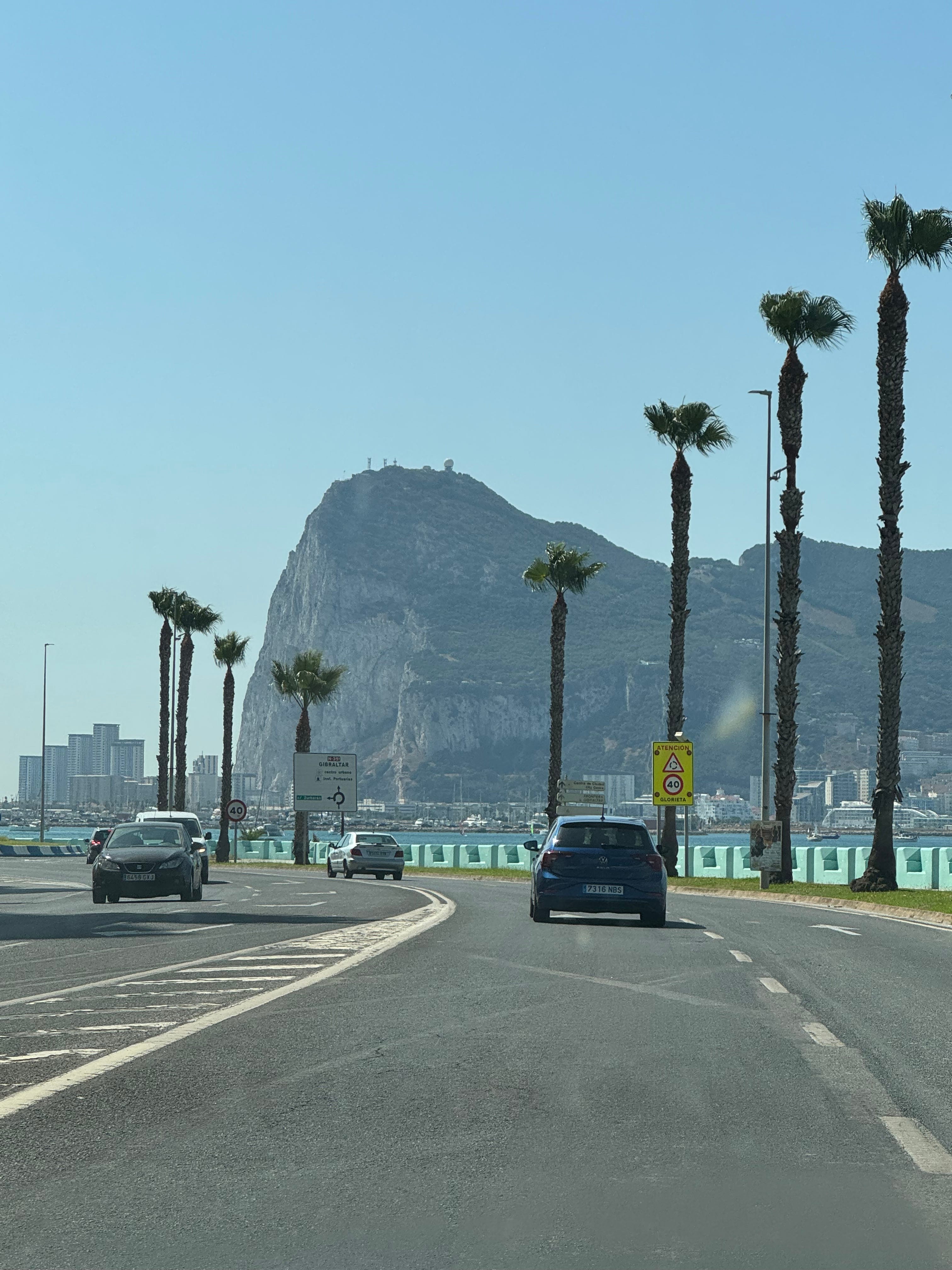
I don’t know…maybe I thought it was supposed to be a national park or something. Not a magnet for high rises and cruise ships. I guess it’s a credit to mankind that we can take the most spectacular of Mother Nature’s creations and turn it into an amusement park.
Gibraltar is home to 34,000 people packed into a 2.6 square mile area around the base of the rock. The backbone of its economy is e-gaming, finance, and tourism with Spain providing the majority of the workforce. This means that people walk back and forth between the two countries every day. Which means they have to cross the runway for the Gibraltar airport after passing through customs on both sides of the border.
And so, I experienced two things I had never done before: walking from one country to the next…
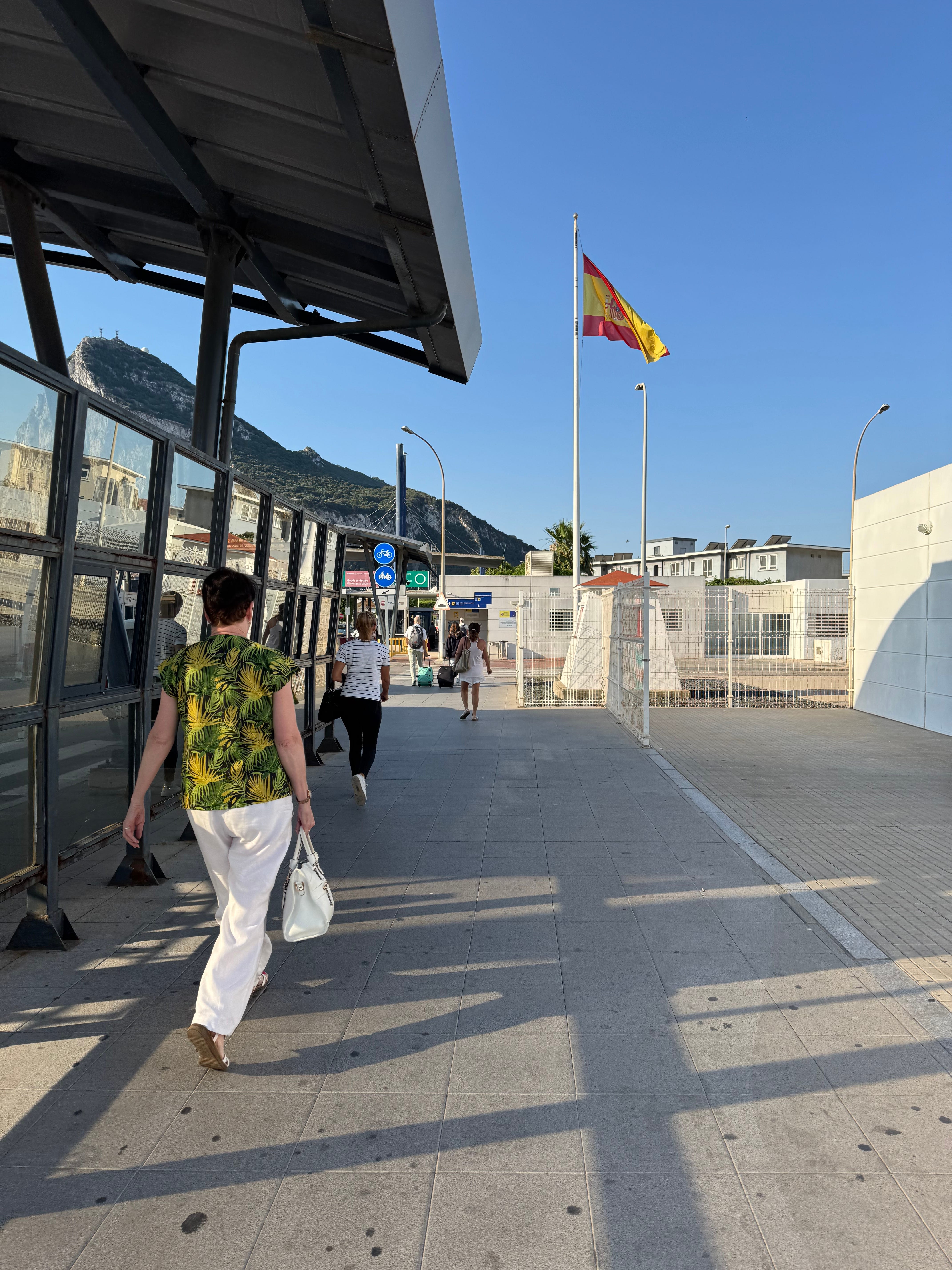
… and crossing the runway tarmac of an active airport.
Fortunately, there is an elaborate system of precaution on both sides where security personnel are in contact with the pilots of the airplanes. About ten minutes before a plane is to land or take off, the pedestrian path is closed. If you’re lucky to time it just right, it’s quite exciting to be at the gate on the ground to hear and feel the power of a plane from close range.
Gibraltar’s history pretty much parallels that of all the Iberian peninsular of Spain, starting out under Islamic control as a permanent watchtower by the Almohads in 1160. It switched control back and forth between the Muslims and Spanish Catholics until it became a part of the Spanish Crown of Castile in 1462 where control remained until 1704 when the Dutch captured Gibraltar from Spain during the War of Spanish Succession. In 1713, it was ceded to Great Britain in perpetuity under the Treaty of Utrecht. Because of its positioning at the Strait of Gibraltar, the narrow entrance and exit between the Mediterranean Sea and Atlantic Ocean, the territory has always been very strategic. The country that controls it, controls half the world’s seaborne trade.
The relationship between Gibraltar and Spain has been fraught with contention for years but none more critical than during the period when Franco was dictator of Spain. His government considered Gibraltar a part of Spain despite its status asa British Overseas Territory. When Gibraltar was granted a new constitution in 1969, Franco ordered the border with Spain closed and it remained so for 13 year, severing all land and communications links. The territory was left without its Spanish workforce, and access to essential services and supplies evaporated. About 4800 Spaniards were affected as well. Those who worked in Gibraltar lost their jobs.
Franco’s aim, of course, was to economically pressure Gibraltar and force a concession on is sovereignty. That effort did not succeed and Gibraltar remains a British Overseas Territory today. Regardless of what official opinions might be, the relationship between Gibraltar and Spain has returned to a symbiosis with thousands of workers crossing the border each day to work in the territory. And, most recently, there is an accord approved but not yet in place that would give Gibraltar the same status as the Schengen Area of the EU, making for ease of passage back and forth without having to go through customs.
There is no doubt that the main reason to go to Gibraltar is to experience the top of the rock. Accessed by cable car, it takes six minutes to climb the 1270 feet to Signal Hill. The rock’s highest peak is near the south end at 1398 feet.
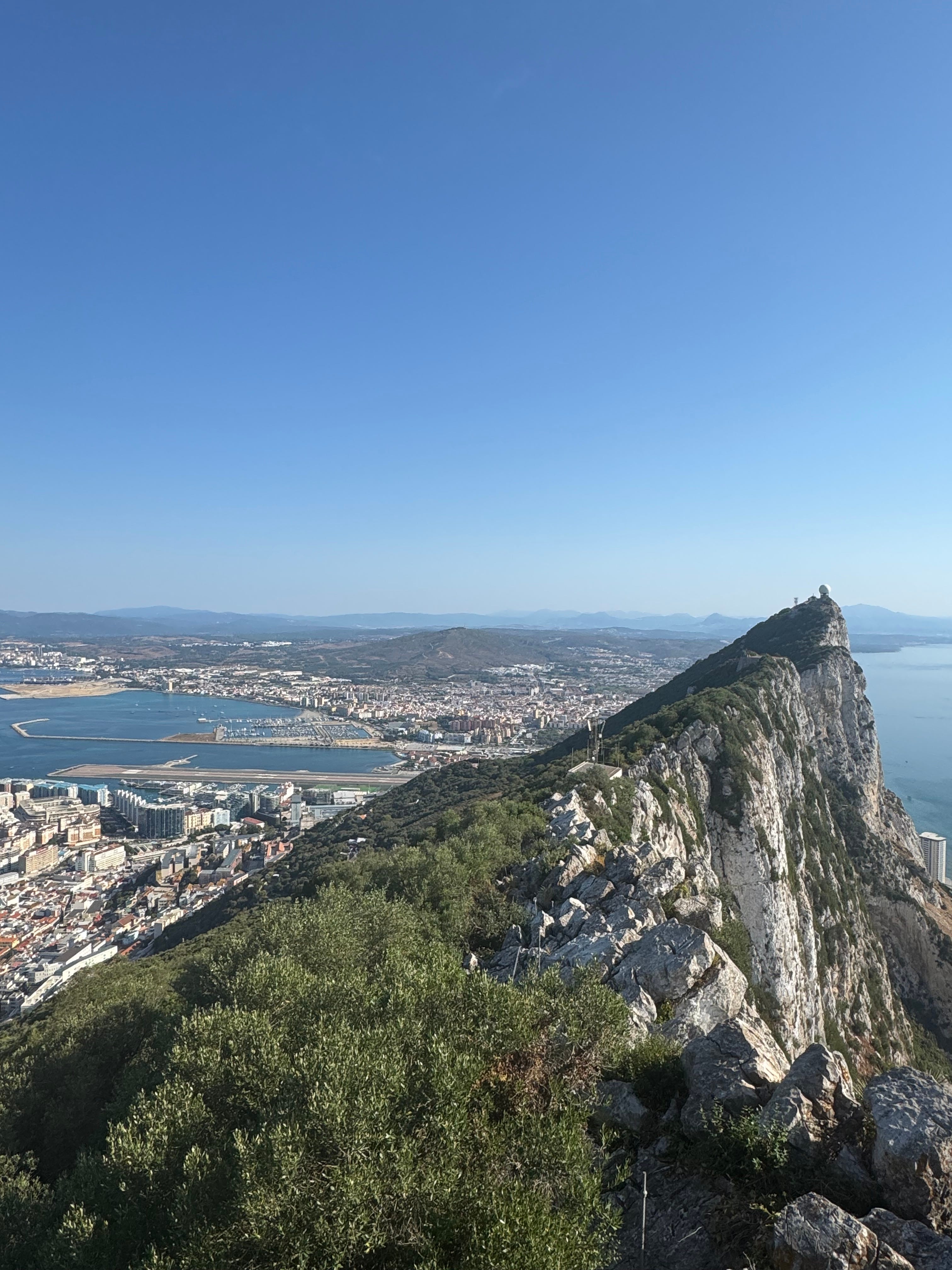
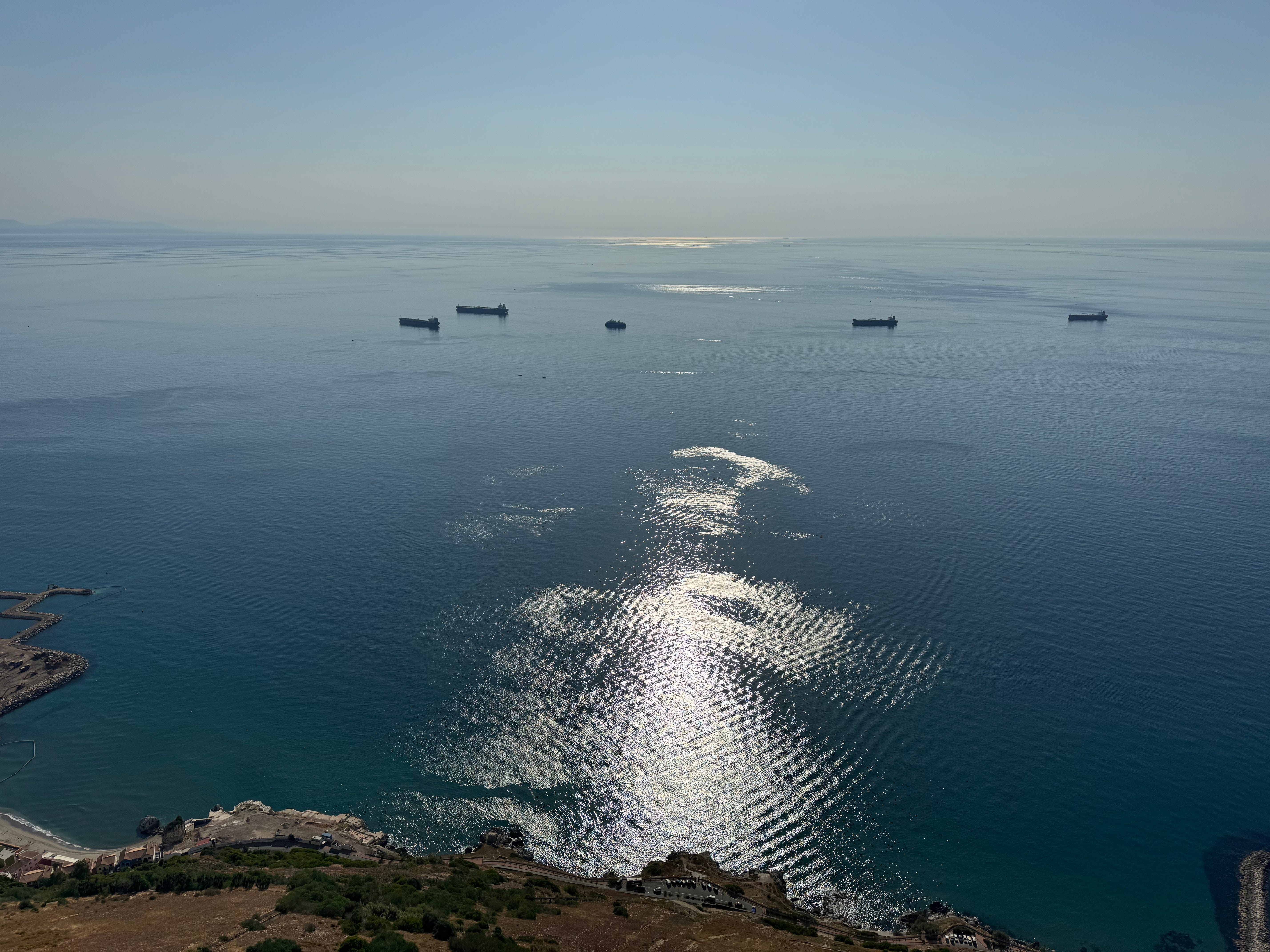
From the spine of the rock to the east, you have an unfettered view of the Mediterranean Sea.
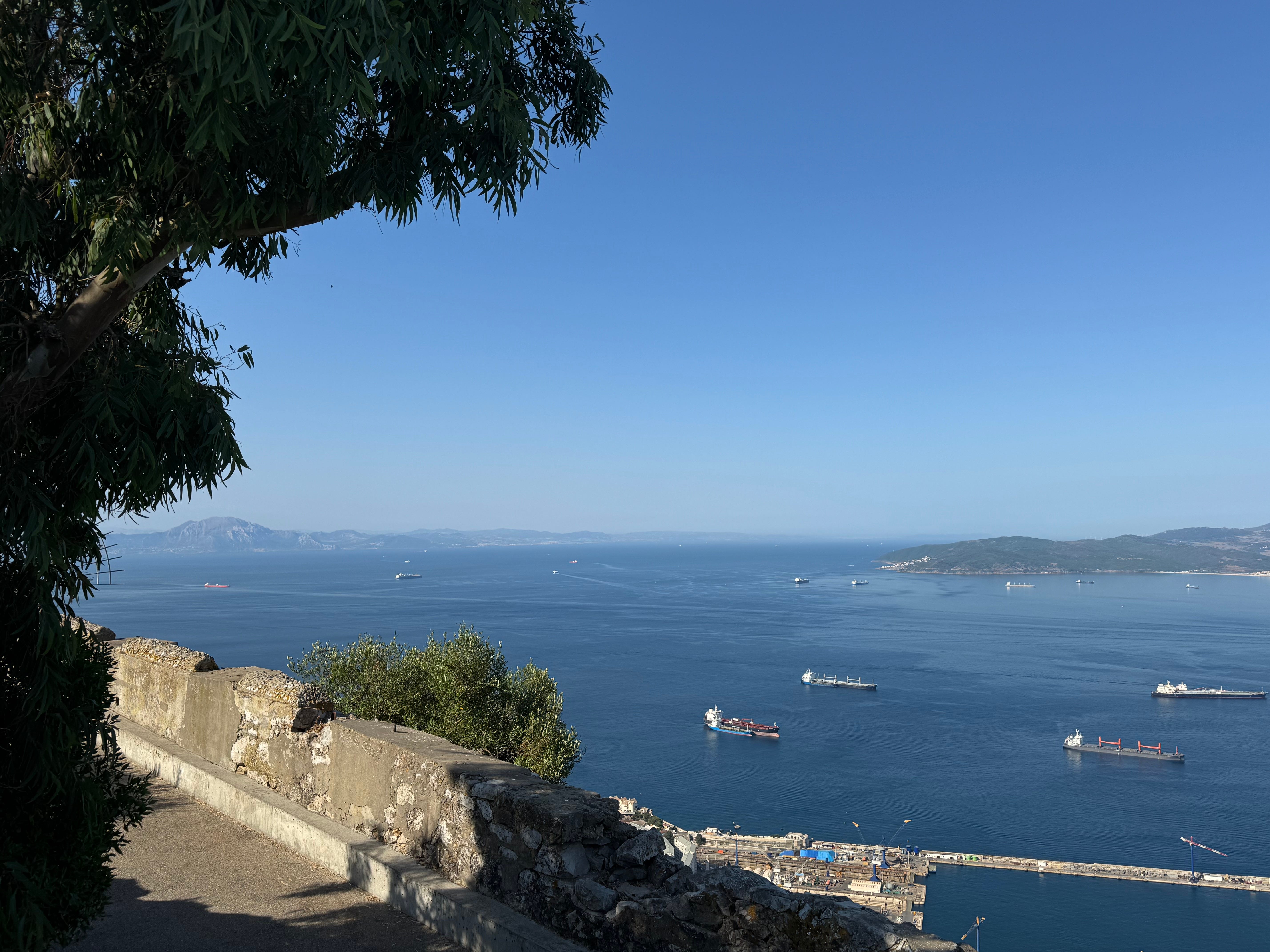
To the west toward the Atlantic Ocean, Strait of Gibraltar separates Morocco on the left and Spain to the right.
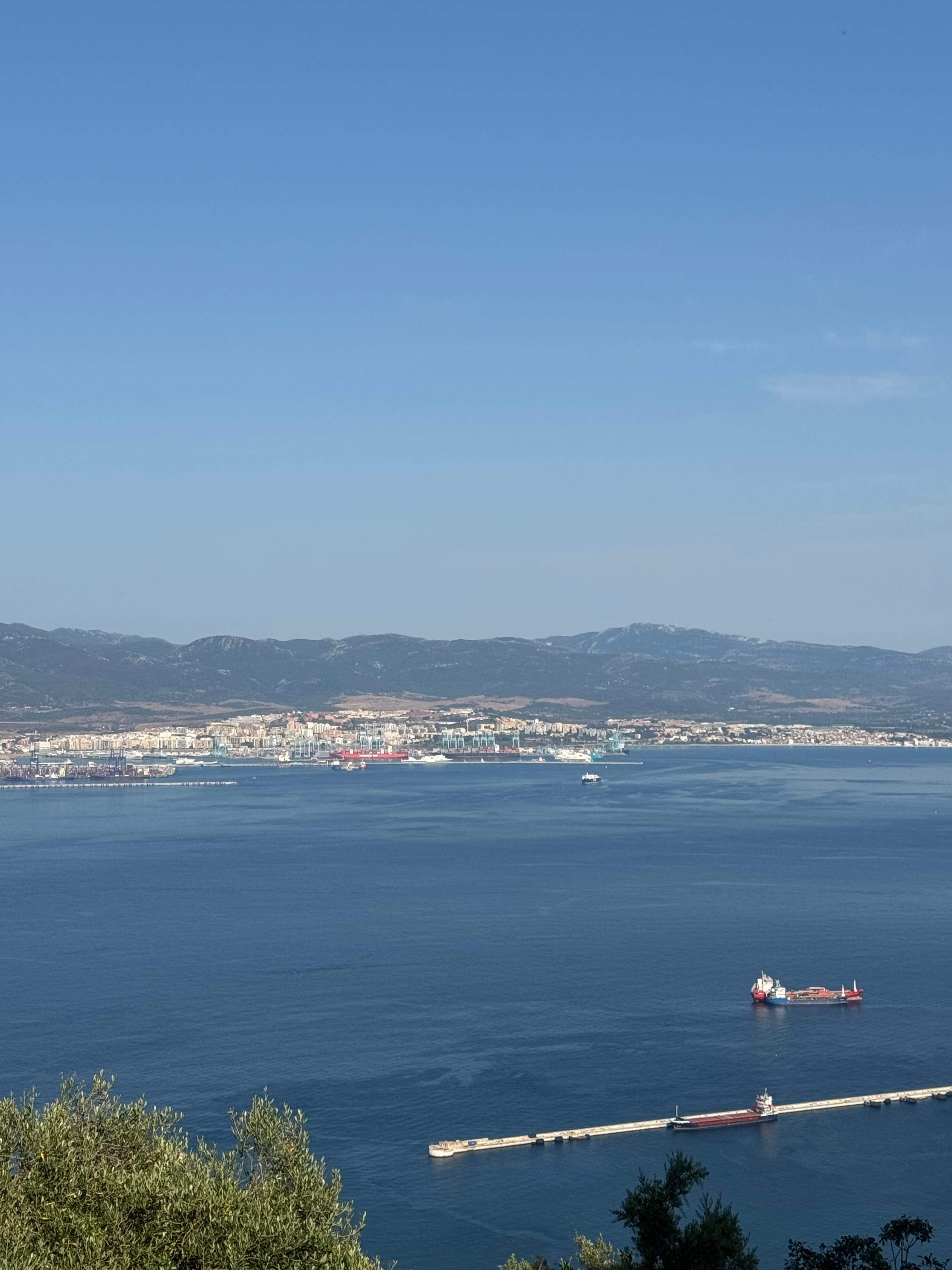
The port of Algeciras (where Alex and Marino finally received their TIE cards) is directly across the bay.
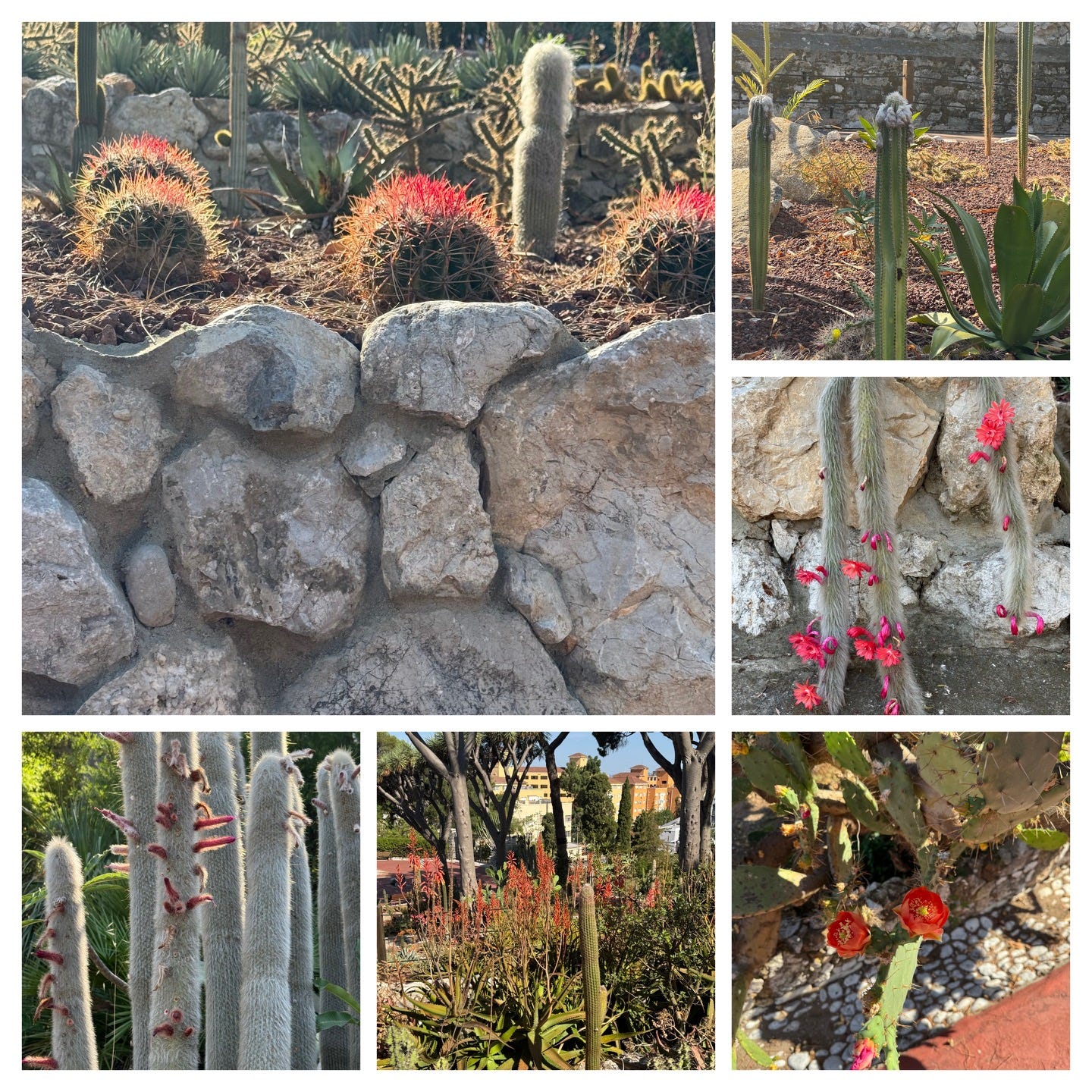
Gibraltar is so compact that everything is vertical—condos, hotels, commercial buildings. There is very little green space. However, we did find a lovely botanical garden that was open to the public. It had an extensive cactus garden and many of them were in full bloom.
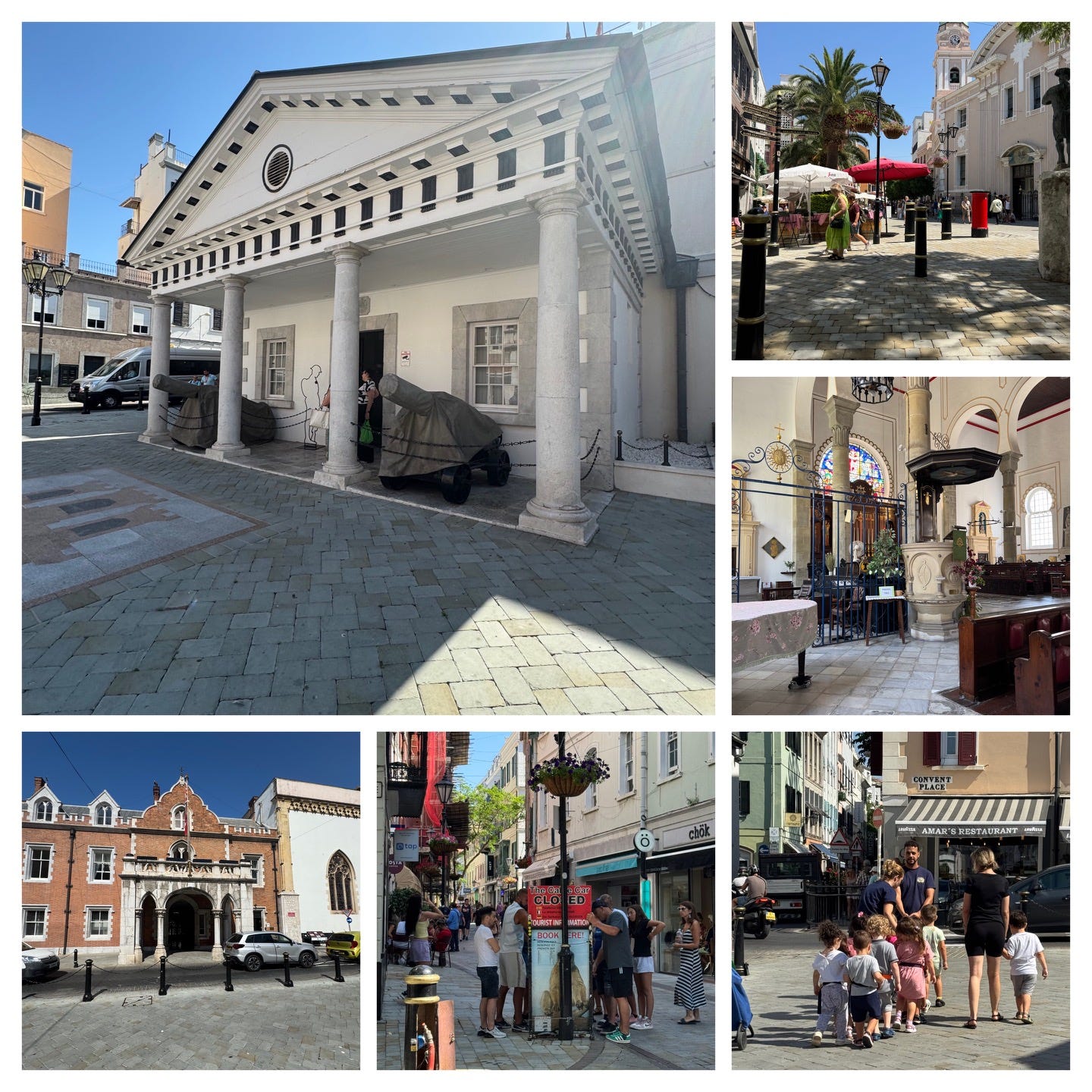
We took a stroll through the heart of the territory, down Main Street, went into a local church, saw the governor’s house and toured the museum.
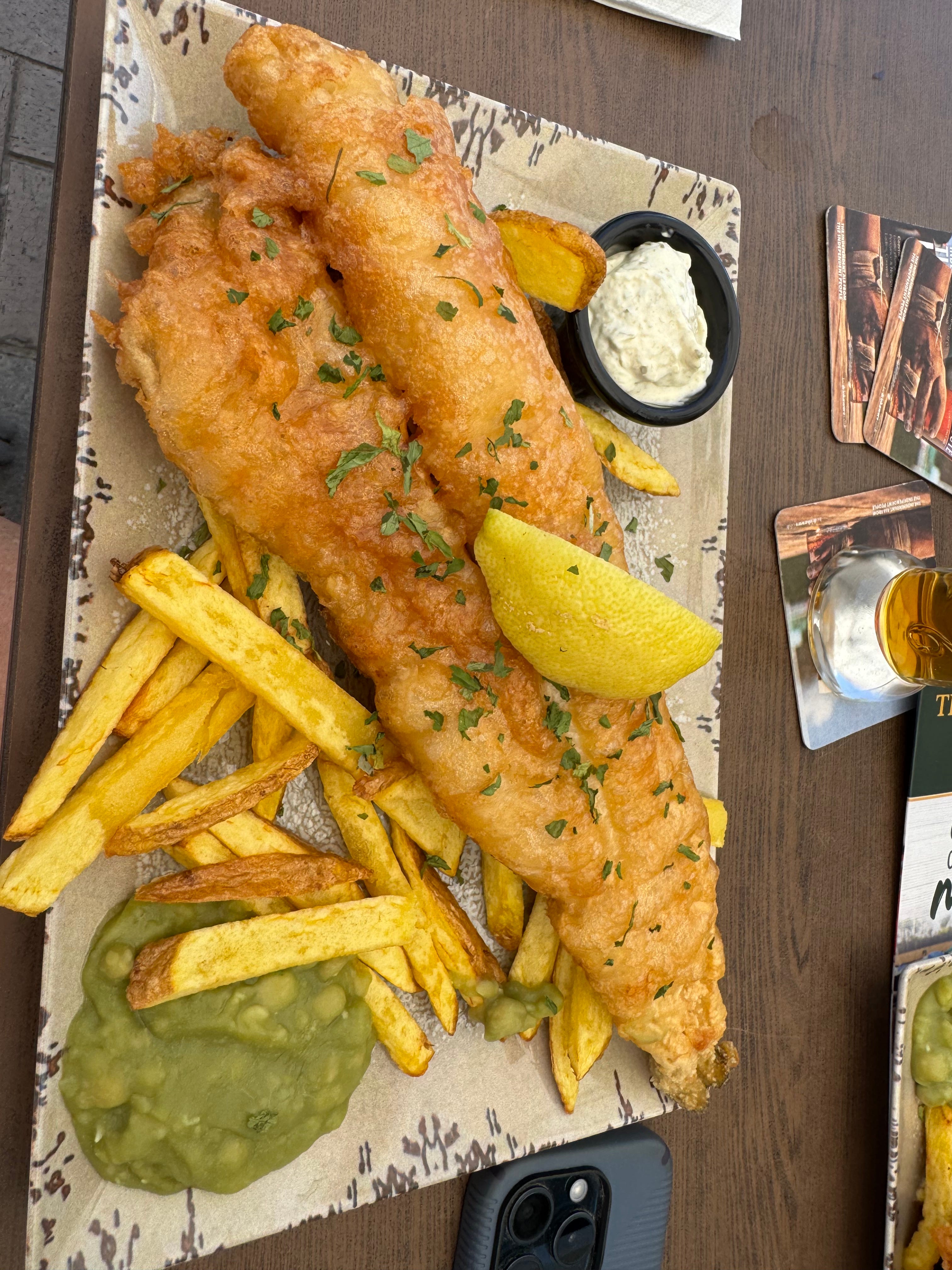
In preparation for or upcoming stay in the UK, we ordered Fish and Chips for lunch.
Gibraltar was a nice interim stop between Spain and the UK. Now, on to Liverpool!
Did you go into the interior of the rock?
Adios Espana, Hello UK!